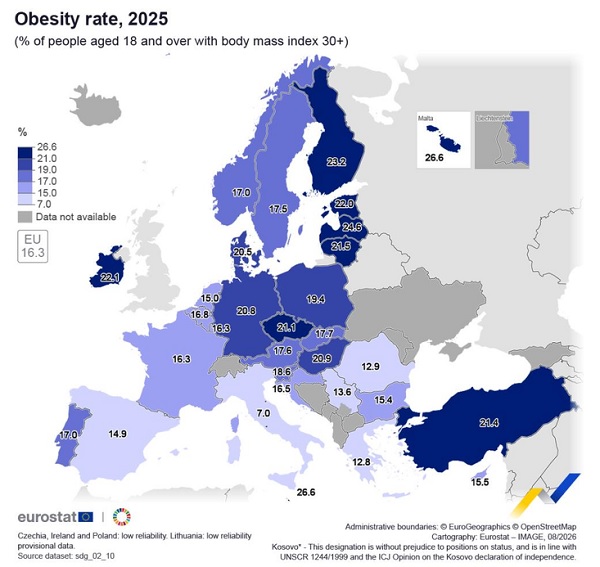

In 2025, 16.3% of adults aged 18 and over in the European Union were classified as obese, according to the latest figures released by Eurostat on 4 September 2026. This means they had a body mass index (BMI) of 30 or higher. An additional 35.4% of the population were pre-obese (BMI between 25 and 30), bringing the total share of overweight adults—either obese or pre-obese—to more than half of the EU population.
Men were more likely to be overweight than women. The obesity rate stood at 17.4% among men and 15.3% among women. Pre-obesity affected 41.9% of men compared with 29.3% of women. Women, however, were more likely to be underweight (2.9%) than men (1.0%).
Obesity rates varied significantly across member states. Malta recorded the highest share, with more than a quarter of its adult population (26.6%) obese. Latvia followed at 24.6% and Finland at 23.2%. The lowest rates were observed in Italy (7.0%), Greece (12.8%) and Romania (12.9%).
The obesity rate is one of the indicators used to monitor progress toward the United Nations Sustainable Development Goals, specifically SDG 2 (Zero Hunger) and SDG 3 (Good Health and Well-being). While SDG 2 focuses on ending hunger and malnutrition, obesity remains a more widespread nutrition-related health challenge in Europe. SDG 3 aims to ensure healthy lives and promote well-being for all ages.
BMI is calculated as weight in kilograms divided by the square of height in metres. Adults with a BMI of 30 or above are considered obese; those with a BMI of 25 to less than 30 are pre-obese; and those below 18.5 are underweight. The overweight category combines the pre-obese and obese groups.